UA
UABlog and writing
Glass figures
This essay expresses my experiences during the war in Ukraine and shows my thoughts on the present life in the UK. Written 20.12.2024
Warm sunlight reached my face as I lifted a tiny glass figure — the size of a bean – towards the sun. I squint against the glow. Lviv is a charming historical town in the heart of Western Ukraine, a town that 7-year-old me loved for the local artisan glass market. Pulling my mom by her sleeve, I excitedly point to a small, yellow polar bear that stands out amid a swarm of colourful blobs. It felt as warm as my family. Carefully wrapping the bear in a soft tissue, I worry not to break it. My glass animal collection was steadily growing, vibrant colours luring every visitor to explore it. They were my treasured artefacts that I cleaned with care every now and then, removing any dust which might occlude their glow. They were see-through — any light, no matter how strong, goes in and leaves with a faint stain. I felt like it was a reflection of my life: as a child, we all take in, but there are few things we give back. As we grow we realise that we are in power to create, give and share warmth with others. The war showed me how brittle the glass is. The small glass animals sorrowfully watched us desperately trying to escape from shells falling near our house. With each bomb falling closer and closer, the vibrations through our house were escalating. We were fortunate enough to leave after 3 weeks of terror. Left behind, the figures that had become my least worry, shattered into razor-sharp pieces. A colourful mess, once loved and cherished, was now a painful reminder of what we have lost. My mind would often race back to my collection, to those warm and comforting memories, only to be agonisingly wounded. It’s paradoxical how something absent – no longer there – can cause such a present pain. War is not only about loss. I gained new figures, but not from glass. From something just as fragile, yet serving no comforting role. Coal figures of terror, grief, and anger which were all too easy to reignite. Wax figures of hope and trust which melted away all too easily. Even in my happiest moments, I couldn’t see the happiness I used to have in those coloured crumbles. I realised that tears from grief and anger were not the “super-glue” able to make everything intact again. After all, I was given a chance to live on, and I had to do it meaningfully. My life journey hadn’t stopped since the war, it took a turn and started with a new strength. My current life in the UK is safe – there is no need to worry about basic survival. I am fortunate enough to have the opportunity to live, and to live in safety. Voices of small children of Mariupol flicker among the crushed pieces of glass figures as if they are asking not to be forgotten as well. It is a privilege to be alive. I might not have a home, a complete family in the house, or a collection of figures. But many people may never see the light shone on them again. Their story is complete, nothing to be changed or said anymore. I am still the writer of my story and it is up to me to choose the ending. This understanding obliges me to prove that my life is not wasted. A year ago I entered a new world, full of opportunities that I felt supported and encouraged to take. Surrounded by materials, I could start crafting new figures. A statue of sympathy and kindness which was asking to be shared. A statue of leadership which served as a base for new activities. Reaching out, communicating, firmly defending my viewpoint against others. These were all outside my comfort zone, but each became lessons for building new figures. The figures, now of concrete and metal, were secure and shatter-proof. They can’t break, that’s nice. Yet they were absorbing all the light that ever reached them, radiating back nothing. I couldn’t hide from the 12 years of my life and the colourful crumbles, hidden away in a far drawer, demanded a change. Once used to radiate happiness, I had a hope I’d be able to repair them. Soldering, bit by bit, I made the crumbles into somewhat similar to the figures I used to have. Metal framing around each piece firmly held the structure together. Bringing a figure to the light revealed something quite mesmerizing. Light rays, previously mostly absorbed by the uniform glass, were now dispersed in a beautiful pattern, reaching every corner of the room. My consciousness grew with the will to help others. All it takes is to cleverly arrange the glass blocks to reflect the light in the direction I wanted them to. I learned to be grateful for the materials I have — the glass or the steel, the brittle or the difficult to work with – and I have learned to make something beautiful out of them. Nothing is irreversible, but I had to learn how to repair it. These repaired experiences became a firm thread, stitching a connection between the past and the present – a connection I had long been missing. The regeneration of my life was an experience caused by what I wish had never happened. Despite the cause, despite the aftermath, there is no choice but to learn how to adapt. The figures are not perfect, and I know they will never be. They reflect the changes in my identity, some sorrowful ones, but some bright ones as well. Someone might shatter my figures, my dreams or my goals, but they will never shatter my will to rebuild everything over and over again, until the day I die. It is the way I live and the way my heart keeps beating every single day.
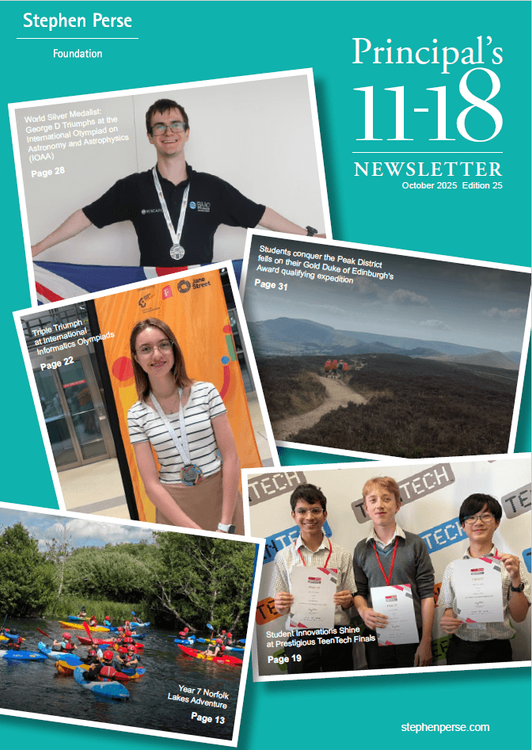
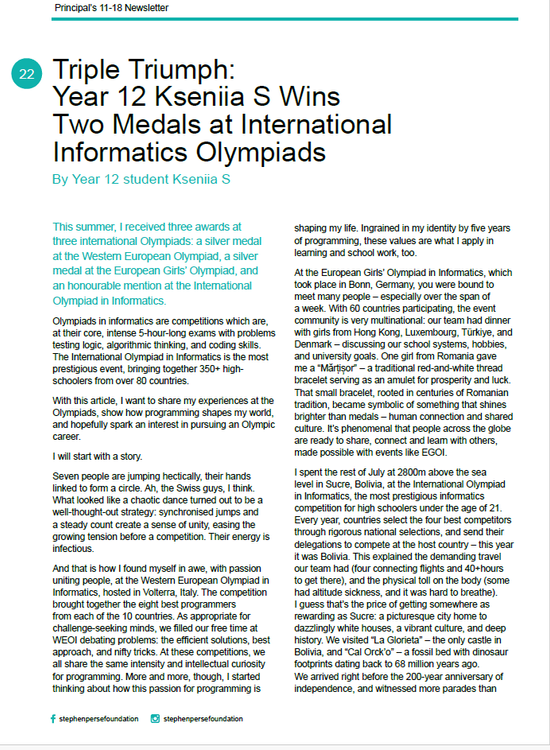
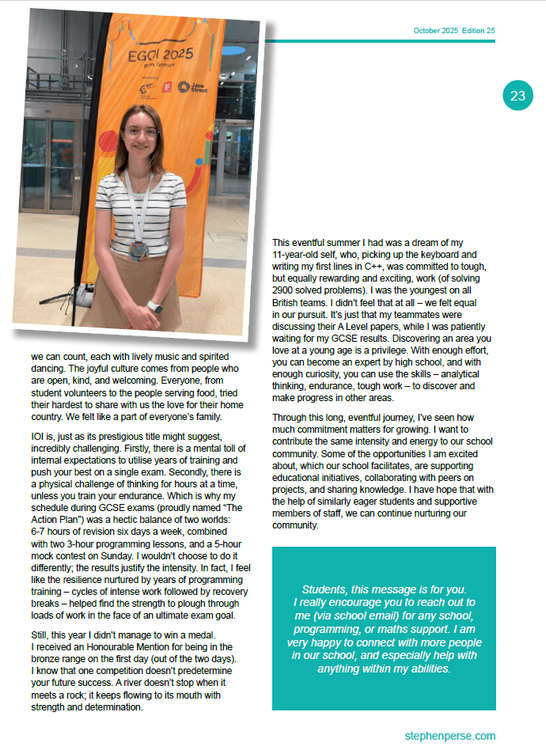
My article featured in the Headmaster's Newsletter of the Stephen Perse Cambridge